




Learn about new Hill Art Foundation exhibitions, events, publications, and much more!
On View
Thucydides Fever Dream, Curated by Xin Wang - Opening September 16, 2026
About
The Hill Art Foundation is a public exhibition and education space that presents rotating exhibitions and ongoing arts education programs. Opened in 2019 in a custom-built 7,700 square-foot space in New York’s Chelsea neighborhood, the Foundation is free and open to the public. Exhibitions include works on loan from the Hill Collection, as well as collaborative projects with leading artists, collections, and institutions. The Foundation was founded by J. Tomilson and Janine Hill, collectors and philanthropists based in New York.
About Page
In the News
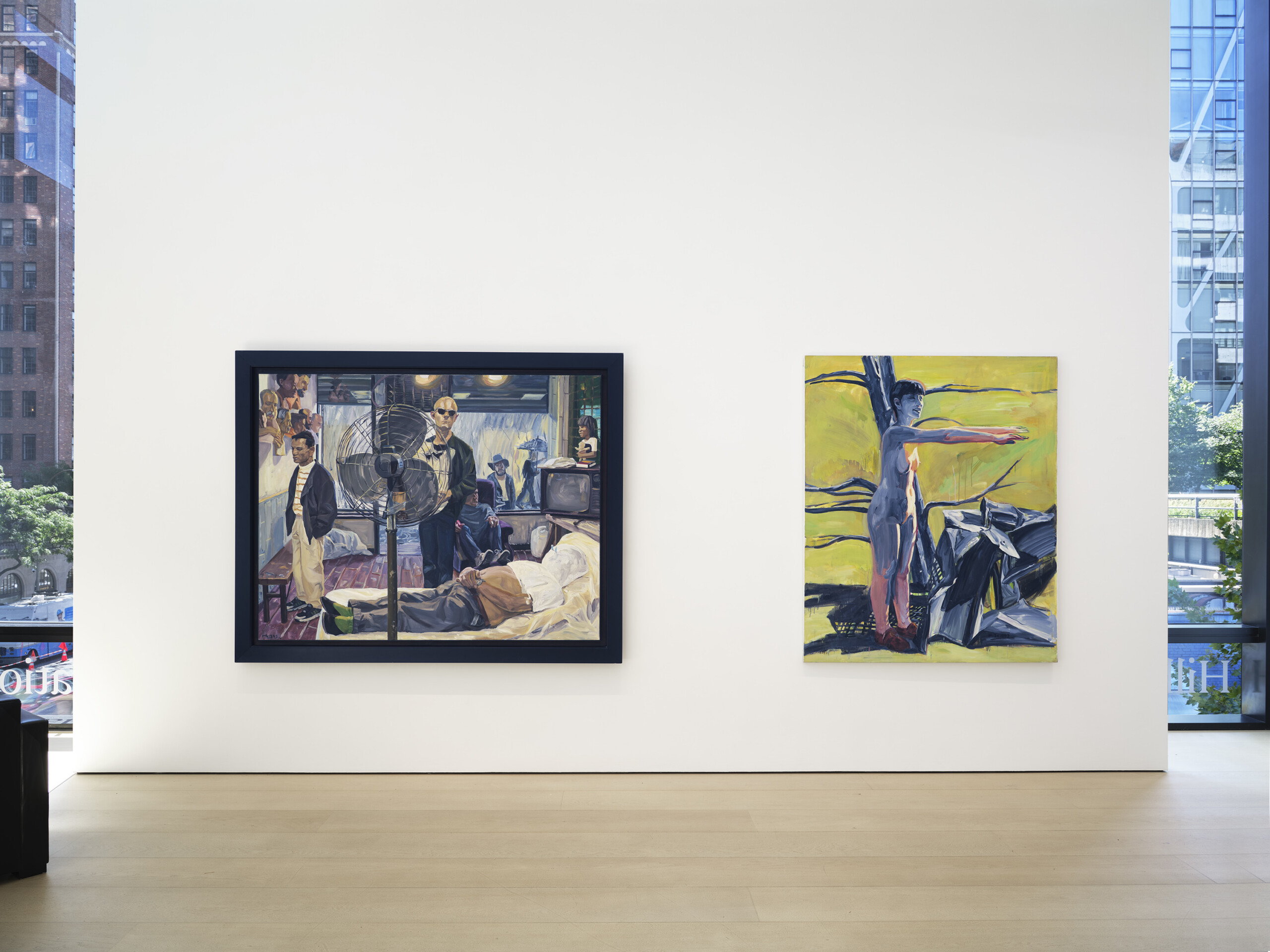
“Thucydides Fever Dream” at the Hill Art Foundation, curated by Xin Wang, is maybe the smartest thing you can see in the neighborhood right now. Chinese artists were a literal hot commodity in the days when the word “BRIC” was fashionable among bankers; changing politico-cultural winds have meant that only Ai Weiwei remains as a consistent object of museum interest at this point, as far as I can tell. Full of subtle stories and thoughtful curatorial flourishes, “Thucydides Fever Dream” explores how artists from the U.S. and China influence each other in ways direct and indirect. Ai does in fact cameo here—as a subject in Liu Xiaodong‘s 1993 painting The Heavy Rain (In New York), in which the artist is shown flat on his back with plaster over his face for a John Ahearn cast, back when he lived in New York. But there are many more names and works I felt humbled not to have known. Mark off a few hours, and catch up on some art history!
Ben Davis, Artnet

Titled Thucydides Fever Dream, the show proposes that we sublimate the longstanding adversity between the US and China into more complex and chaotic social forms. In Wu Ziyang’s two-channel videowork New Silk Frequencies (2026), we encounter a 3D-animated retro-futuristic universe where TV stands for ‘Totemic Vessel’, and movies are known as ‘Parallel Realities’. Through headphones, we hear audio derived from fragments of a real-life documentary about a satellite project that, beginning in 2015, saw China attempting to close the digital divide in Africa by installing solar-powered television infrastructure across the continent.
One interviewee, a villager and widow whose animated avatar (the artist’s interpretation of her) wears gold rings and bracelets, small gold satellite dishes on her head and pastel-coloured wires like goggles around her eyes, reports finding security and comfort in TV: her kids don’t “run around anymore” now that they wear metal viewing devices around their heads. Another villager reports feeling invisible to the world, and yet another, a bespectacled office worker, says, “It’s only StarTimes” – the Chinese media company – “that is seeing us.”
Jenny Wu, ArtReview
